

Projects
This project aims to design a portable, campus-friendly wind turbine that can be easily transported and deployed in various locations. The turbine will harvest ambient wind energy and convert it into usable power for small devices, such as charging a phone or other low-power electronics.

This project aims to create a self-sustaining clean energy storage and charging station designed for rural communities. Solar panels generate electricity to produce hydrogen through water electrolysis, which is then stored in metal hydrides and later released to power a fuel cell that provides reliable charging for small devices. The system offers a renewable, closed-loop solution that produces only clean water as a byproduct.

EPO aims to ferment second generational biofuel ethanol through food waste banana peels. Biofuels are a vital part in the fight against climate change as they provide a cleaner alternative to gasoline in terms of green house gas emissions. Currently, EPO is working towards this goal through performing an alkaline pretreatment, enzymatic hydrolysis, fermentation, and finally a distillation of the banana peels to hopefully achieve a relatively high yield rate of biofuel ethanol.

This project aims to advance cryodesalination into a practical and scalable method for producing fresh, potable water. By engineering a small, energy-efficient, and cost-effective saltwater distillation system, the technology could support agriculture, human consumption, wastewater treatment in oil and gas operations, and expand freshwater access for coastal communities.
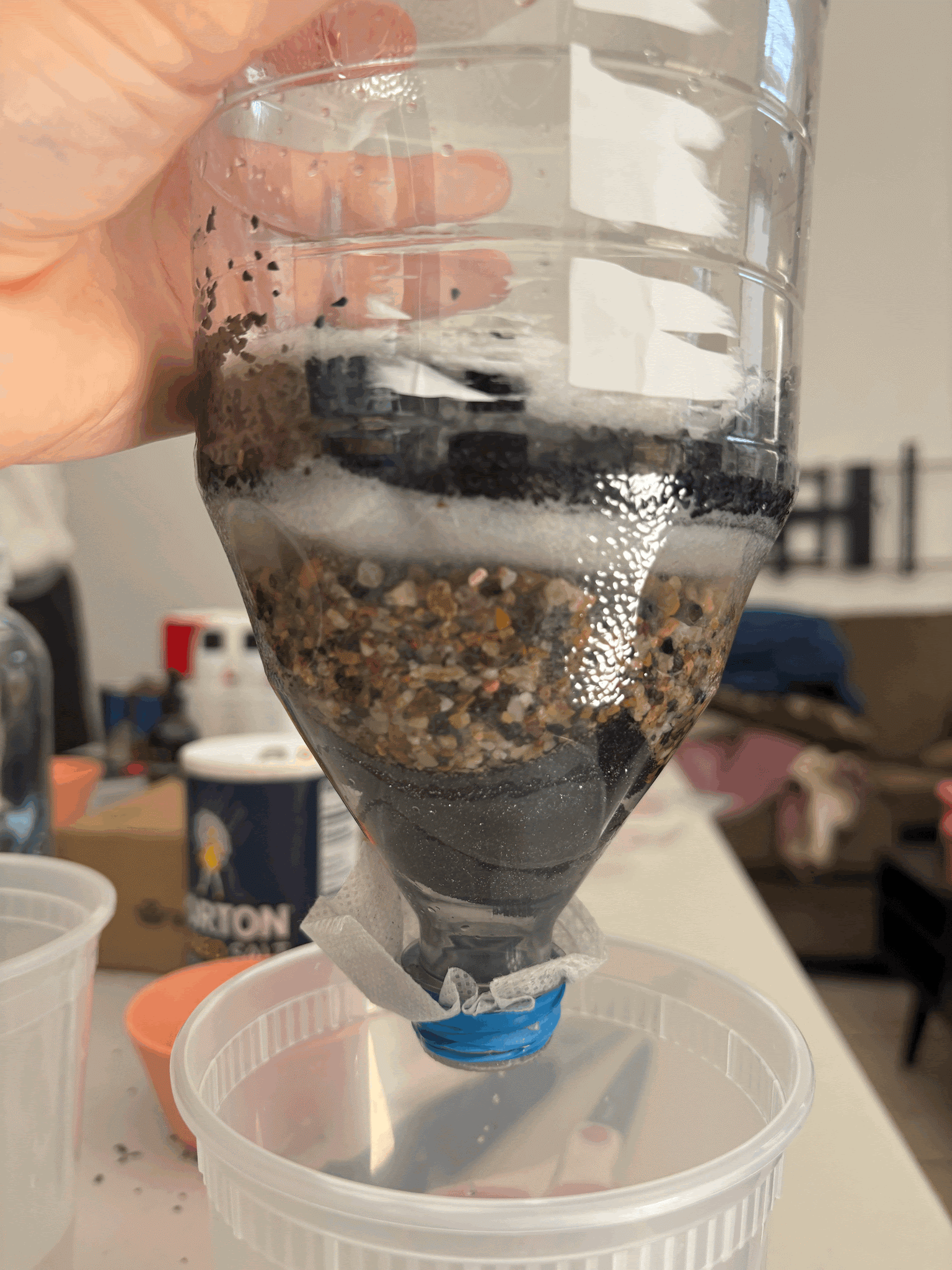
Phosphorus Water Treatment
This project focuses on reducing local eutrophication by developing portable devices that recover phosphorus and optimize ion-exchange processes. Through proof-of-concept batch and continuous-flow experiments, we evaluated resin capacity, precipitation behavior, and phosphate removal efficiency. Using UV-Vis spectroscopy and a calibrated standard curve, we achieved precise phosphate concentration measurements at low ppm levels to guide system optimization.

This project uses anion-exchange resin to remove negatively charged uranium complexes from well water. As contaminated water passes through the resin column, uranium displaces the original ions on the beads, allowing for effective capture and later regeneration with a strong base. The process is efficient, continuous, and economically viable due to the resin’s reusability.

Board Members

Isabel Kikoshima
Program Director

Andrew Itagaki
Program Manager

James Harriman
Assistant Program Director

Jules Go
Program Manager

Megan Caramat
Assistant Program Manager

Tanay Shah
Assistant Program Manager

Sean Jung
Resource Coordinator
Sponsors:


